August 28, 2026
If you are prone to symptoms such as headaches, hives, digestive symptoms such as loose stool or bloating or you’re struggling with food sensitivities and these symptoms worsen around ovulation or before your period then there is a reason for that.
This pattens happens consistently in clinical practice. Patients describe feeling that their body “resets” after their period starts and then symptoms worsen again a week and a half later when it starts again at ovulation. These symptoms can be brushed off as PMS or stress but if you have a Mast Cell disorder, there is a physiological explanation for your flares.
The Hormone-Mast Cell Connection
Mast cells are immune cells found throughout the body. These cells are located in the skin, gut, respiratory track, nervous system and release histamine and other inflammatory chemicals in response to triggers. In Mast Cell Activation Syndrome (MCAS), the release happens too easily or too often without a true allergic trigger.
Estrogen and mast cells have a direct relationship. Estrogen can activate mast cells and encourage them to release more inflammatory chemicals, such as histamine. On the other hand, Progesterone has a calming effect on mast cells.
Across the menstrual cycle, estrogen rises in the first half and peaks around ovulation. Estrogen then drops after ovulation, rises again in the luteal phase and then and dips before the period. Progesterone rises after ovulation and drops sharply in the days before the period starts. The drop in estrogen after ovulation and the late-cycle drop in progesterone before the period is why mast cells can become triggered and cause flare ups in these two sensitive times during the cycle.
Are Your Symptoms Worse with Your Menstrual Cycle?
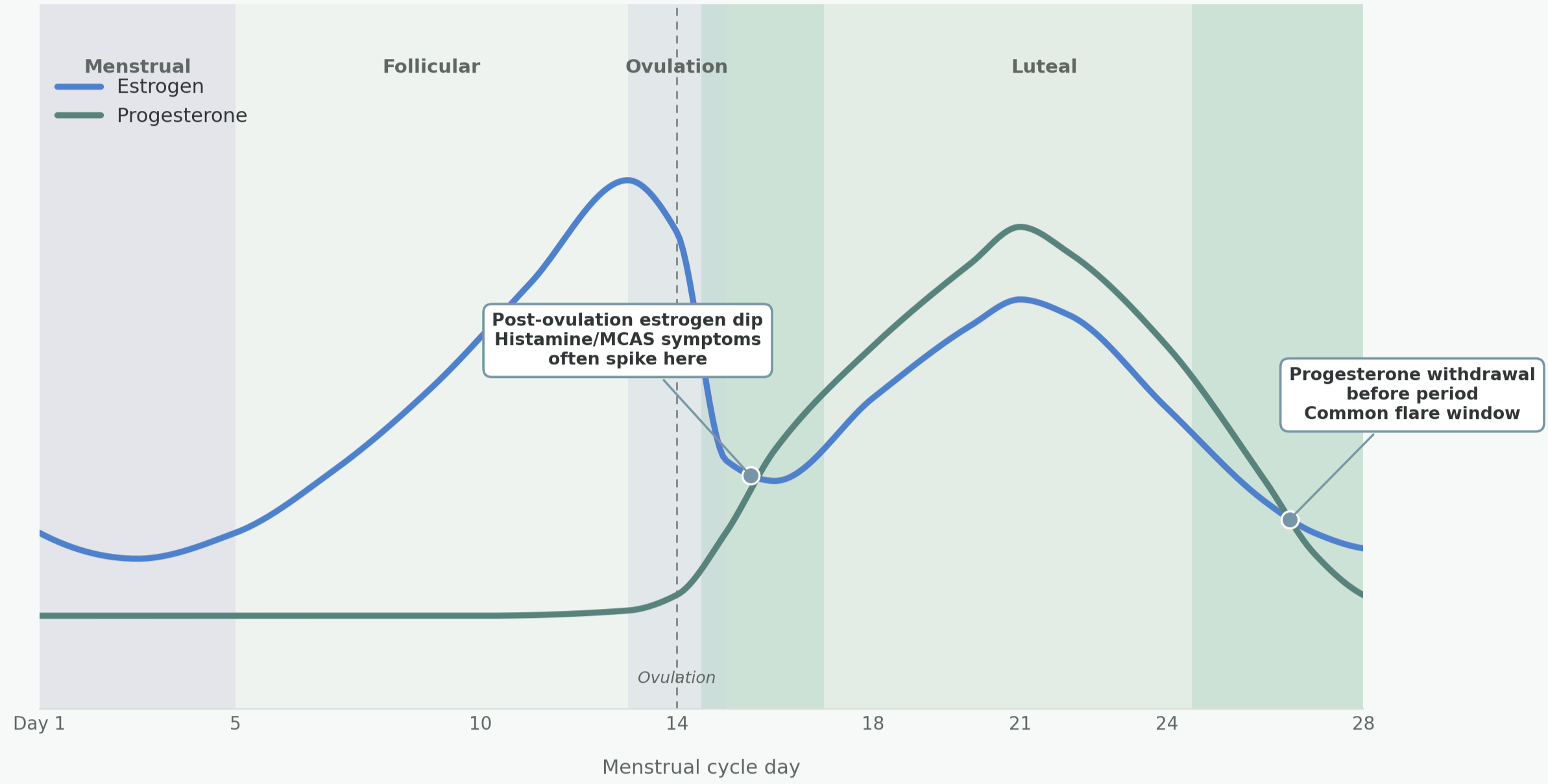
These cycle-related symptom flares can show up as:
Increased skin reactions such as flushing or hives
Amplified reactions to foods, chemicals or supplements
Worsening gastrointestinal symptoms such as bloating or diarrhea
Cardiovascular symptoms such as dizziness or heart palpitations
More brain fog, anxiety or fatigue
Headaches or migraines
Why This Often Gets Missed
Cyclical symptoms can get written off for the following reasons:
Standard testing is often normal. Hormone panels or allergy testing can come back as “within normal limits”. For hormonal blood work, it is usually done at a certain time in the month and does not capture the full picture of the cycle.
The pattern isn’t obvious. The connection is difficult to see unless you’re tracking your symptoms along with your cycle. Symptoms can range from month-to-month depending on your personal life circumstances e.g. more stress one month versus the other will cause worsening flares.
It’s chalked up to PMS. If it’s considered a normal part of the menstrual cycle then it’s just something to manage every month without addressing the underlying causes.
The Takeaway
There is a cause for your flare ups around your cycle. If you’re interested in learning more about your cycle, mast cell symptoms and how I can help, schedule a discovery call below.